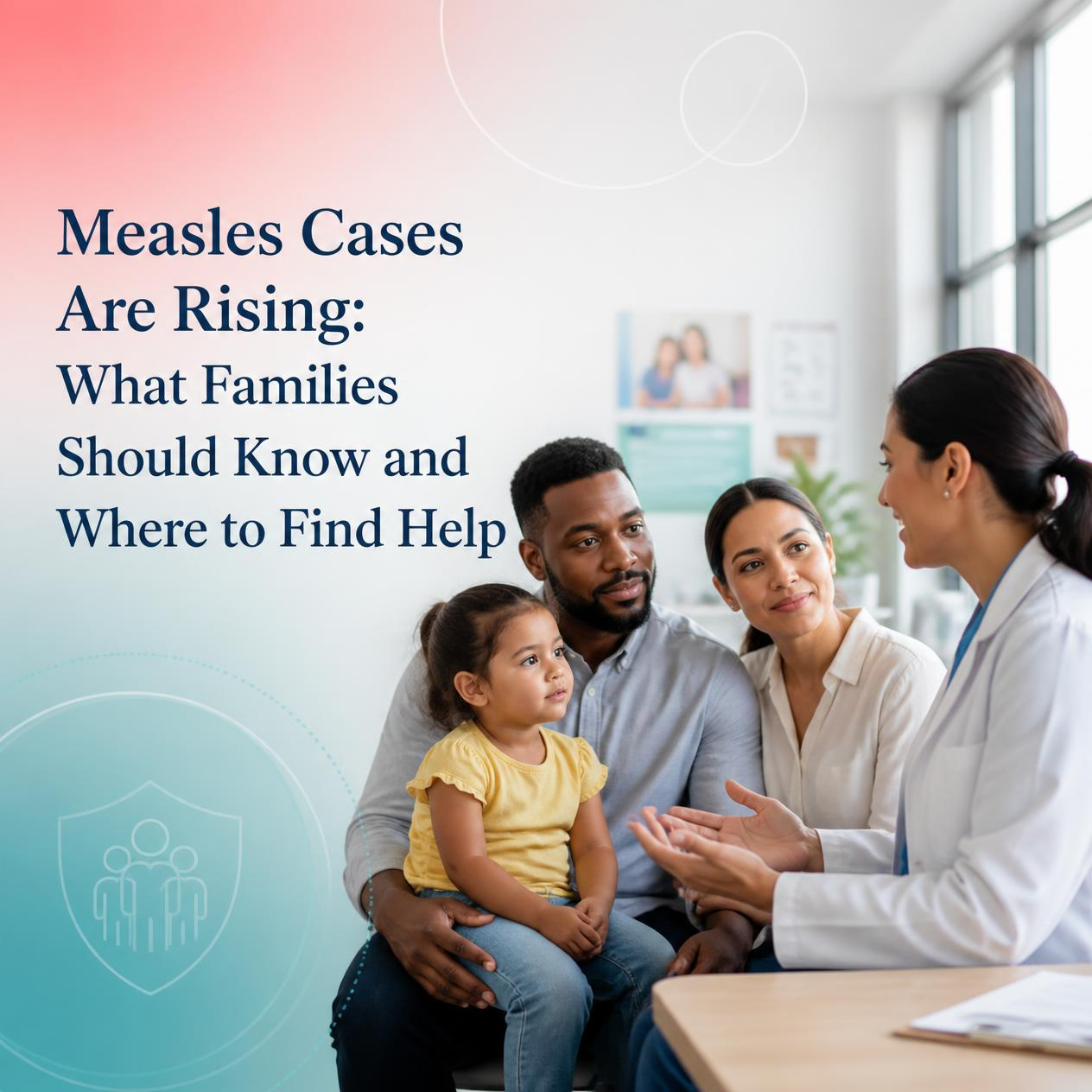
As children return to school, families hear more about measles again. Seeing headlines about outbreaks can be frightening, especially when parents and grandparents are trying to keep their families healthy.
However, fear does not have to guide our decisions.
Reliable information can help us understand what is happening and decide what steps to take.
What Is Happening with Measles in 2026?
According to the Centers for Disease Control and Prevention, 2,777 confirmed measles cases had been reported in the United States as of August 20, 2026.
Cases have been reported across 47 jurisdictions.
Fortunately, North Carolina’s current situation is quieter. The North Carolina Department of Health and Human Services reports that the state has had no newly reported measles cases since the week ending February 21.
Still, families should understand the illness because measles spread easily.
What Does Measles Look Like?
Measles is a highly contagious respiratory illness.
Early symptoms can include fever, cough, runny nose, and red or watery eyes. Afterward, a rash typically appears.
Because symptoms can resemble other illnesses at first, parents should contact a healthcare professional if they believe someone in their household may have measles.
Importantly, call the healthcare facility before arriving when measles is suspected. That allows staff to take precautions to reduce exposure to other patients.
Measles Can Become Serious
Although people can recover from measles, complications can occur.
For example, measles can lead to pneumonia. In addition, serious neurological complications can develop.
Young children and people with weakened immune systems may face greater risks from complications.
Therefore, measles should not be treated as simply another childhood rash.
Check Your Family’s Health Records
Back-to-school season is already a good time to review children’s health information.
Consequently, parents can use this opportunity to check vaccination records and discuss questions with their child’s healthcare professional.
North Carolina health officials recently reminded families that vaccines are available through medical offices, community health centers, local health departments, and pharmacies.
Additionally, eligible children who lack insurance may qualify for vaccines at low or no cost through the Vaccines for Children program.
Know Where to Find Reliable Information
Social media can spread information quickly. Unfortunately, correct and inaccurate information often appears together.
Start with trusted health sources instead.
The CDC provides national measles information, while state and local health departments provide information about cases and exposures in individual communities.
Parents can also speak directly with their pediatrician or family healthcare provider about their individual circumstances.
Helping Others Starts with Sharing Good Information
Thursday at Ree’s Life is about helping people find resources they may not know are available.
Therefore, consider sharing reliable measles information with parents, grandparents, caregivers, and teachers.
Someone may need help finding a health department.
Another family may not know about programs that provide vaccines to eligible children.
Most importantly, we can help one another without creating panic.
Stay informed. Ask questions. Use trusted resources. Then, make healthcare decisions with qualified healthcare professionals who understand your family’s needs.
Helping our communities stay healthy begins with making reliable information easier to find.
References
Centers for Disease Control and Prevention (CDC) – Measles
National information about measles, symptoms, outbreaks, prevention, and vaccination.
North Carolina Department of Health and Human Services – Measles Cases and Outbreaks
Current North Carolina measles information, case updates, and public-health guidance.
Vaccines for Children (VFC) Program
Federal program that helps eligible children receive recommended vaccines at no cost.
https://www.cdc.gov/vaccines-for-children
Health Resources and Services Administration – Find a Health Center
Search for federally supported community health centers that provide healthcare regardless of ability to pay.