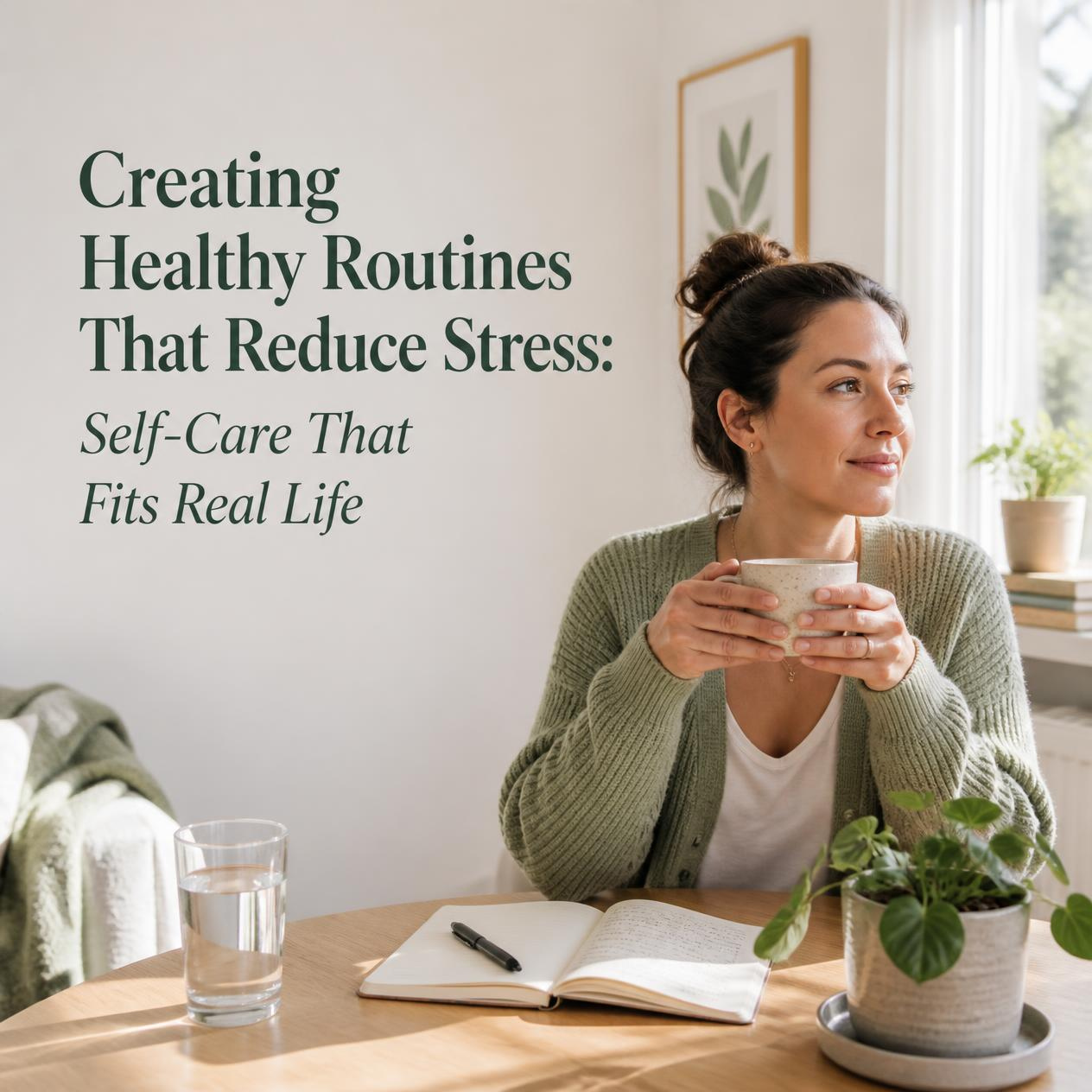
When life gets busy, taking care of ourselves can quickly move to the bottom of the list. We tell ourselves we’ll rest when everything is finished, exercise when we have more time, or start a healthier routine next Monday.
The problem is that there is almost always something else to do.
That’s why I believe healthy routines should fit into our real lives instead of requiring us to completely rearrange them.
This week, we’ve been working on Step 2 of my 10 Steps to Self-Care Challenge:
“Say exactly what you mean.”
Interestingly, that simple phrase can also help us create healthier routines.
BE HONEST ABOUT WHAT ISN’T WORKING
Before creating a new routine, take an honest look at your current one.
Maybe you’re staying up too late because you’re scrolling on your phone.
Perhaps you’re saying yes to commitments when you don’t really have the time.
You may skip meals because your schedule is packed.
Or maybe you’re trying to do so much each day that you never permit yourself to rest.
Saying exactly what you mean begins with being honest with yourself.
Try saying:
“I am tired.”
“My schedule is too full.”
“I need help.”
“I need more time for myself.”
“I cannot keep doing everything.”
Once we find the real problem, we can begin making small changes.
BUILD ROUTINES AROUND WHAT YOU ALREADY DO
A healthy routine doesn’t need to involve an elaborate morning schedule.
Instead, attach a small self-care habit to something you’re already doing.
After you brush your teeth, drink a glass of water.
While your coffee or tea is brewing, take slow breaths.
After dinner, take a short walk.
Before bed, put your phone away and spend a little quiet time journaling, reading, or simply relaxing.
Small routines are easier to repeat because they become part of activities that already happen in your day.
PROTECT YOUR TIME
One of the hardest self-care habits can be setting boundaries around our time.
Sometimes reducing stress requires saying no.
Other times, it means saying, “I can’t do that today, but I can help another day.”
You might also need to say, “I need an hour to myself.”
Clear communication doesn’t make you selfish. It helps other people understand what you can realistically give.
CREATE A SIMPLE EVENING RESET
Before going to bed, take five or ten minutes to prepare for tomorrow.
You could:
• Fill your water bottle.
• Choose your clothes.
• Write down your three main priorities.
• Put something away that has been bothering you.
• Prepare breakfast or lunch.
• Set your phone aside.
• Take slow breaths.
Then let the day end.
You don’t have to complete everything tonight.
GIVE YOURSELF ROOM TO ADJUST
A routine should support your life, not control it.
There will be days when your plan doesn’t work. Instead of deciding you’ve failed, adjust and begin again.
Self-care isn’t about creating a perfect schedule.
It’s about intentionally creating small moments that support your physical, mental, and emotional well-being.
THIS WEEK’S SELF-CARE CHECK-IN
As Week 2 comes to an end, ask yourself:
“What do I need more of in my daily routine?”
Then say exactly what you mean.
Maybe you need more sleep.
Maybe you need movement.
Maybe you need quiet.
Maybe you need help.
Maybe you need to say no.
Once you’ve found what you really need, choose ONE small routine that supports it.
Don’t try to change your entire life this weekend.
Start with one thing.
Small habits practiced consistently can become part of a healthier and more peaceful way of living.
References
National Institute of Mental Health (NIMH)
Caring for Your Mental Health
https://www.nimh.nih.gov/health/topics/caring-for-your-mental-health
National Institutes of Health (NIH)
Emotional Wellness Toolkit
https://www.nih.gov/health-information/your-healthiest-self-wellness-toolkits/emotional-wellness-toolkit
Centers for Disease Control and Prevention (CDC)
Managing Stress
https://www.cdc.gov/mental-health/living-with/index.html
Centers for Disease Control and Prevention (CDC)
Health Benefits of Physical Activity for Adults
https://www.cdc.gov/physical-activity-basics/health-benefits/adults.html