Taking care of ourselves includes paying attention to what our bodies need. This week, our self-care principle is “If it feels wrong, don’t do it.” Although we often apply that advice to relationships and decisions, it can also remind us to pay attention to our physical health.
High blood pressure deserves attention because it can affect the heart, brain, kidneys, and blood vessels. Fortunately, everyday food choices can become part of a heart-healthy lifestyle.
No single fruit can magically lower blood pressure. However, research behind the DASH eating plan shows that a diet rich in fruits, vegetables, whole grains, low-fat dairy, beans, nuts, fish, and other nutritious foods can help lower blood pressure.
Why Potassium Matters
Potassium is an essential mineral that helps our bodies function properly. In addition, potassium-rich foods can help reduce the effects of sodium and ease tension in blood vessel walls.
Rather than at once reaching for supplements, consider adding potassium-rich foods to your meals when proper.
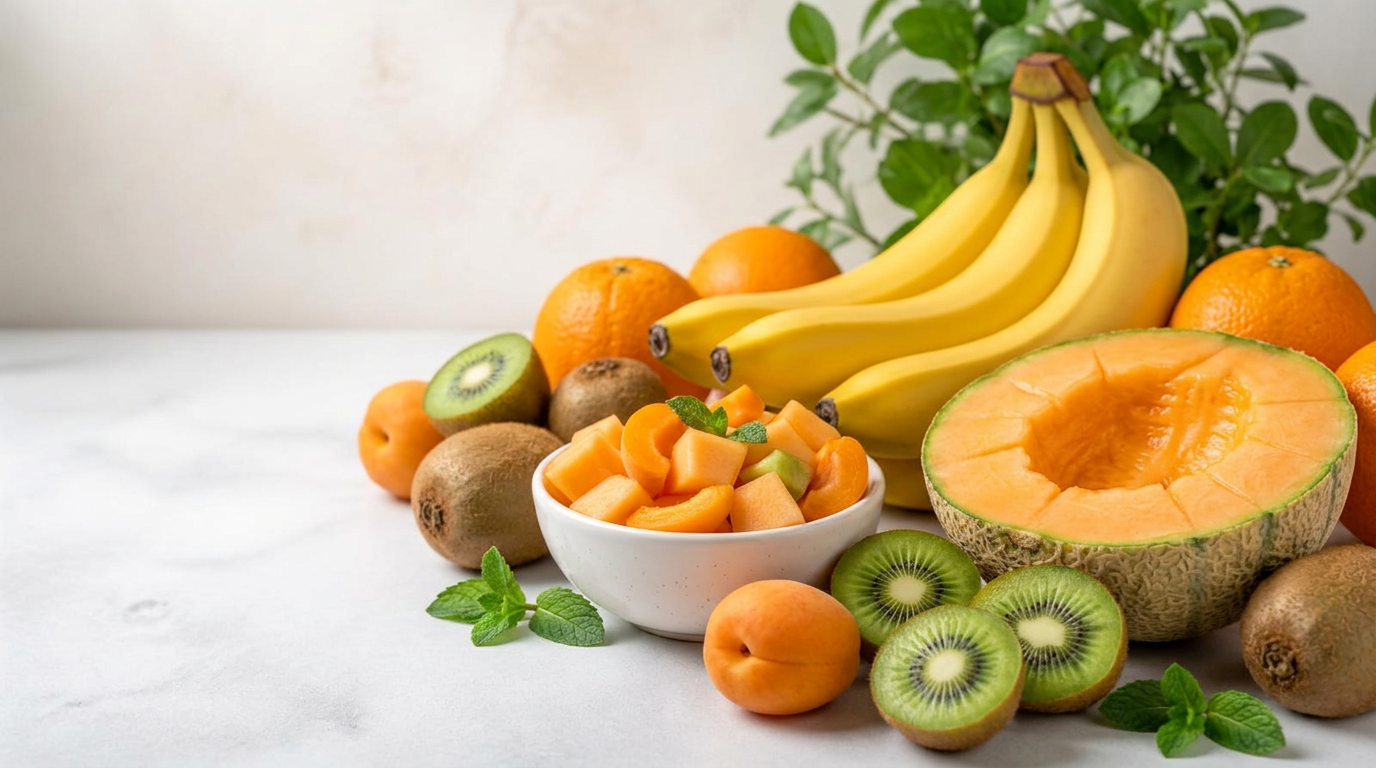
Here are five fruits worth putting on your grocery list.
1. Bananas
Bananas are probably the fruit most people associate with potassium.
A medium banana has roughly 450 milligrams of potassium. Furthermore, bananas are convenient, affordable, and easy to add to breakfast.
Try sliced banana with oatmeal or plain yogurt. Alternatively, add frozen banana to a smoothie.
2. Cantaloupe
Cantaloupe provides potassium while adding natural sweetness to a meal.
For example, cut cantaloupe ahead of time and refrigerate individual portions. As a result, you will have an easy fruit choice available when you want a snack.
3. Kiwifruit
Kiwi is another potassium-rich fruit listed by the American Heart Association.
Additionally, kiwi provides vitamin C and other nutrients. Slice it into a fruit bowl or enjoy it alongside breakfast.
4. Apricots
Fresh apricots offer another way to add potassium-rich fruit to your eating routine.
When buying dried apricots, however, check the nutrition label and portion size. Dried fruit is concentrated, so a smaller serving goes further.
5. Oranges
Oranges provide potassium, vitamin C, and other nutrients.
Whenever possible, choose whole fruit. Whole oranges also provide fiber, while juice makes it easier to consume more quickly.
Think Beyond Five Fruits
These five choices are not a special blood-pressure cure.
Instead, focus on your overall eating pattern.
The DASH eating plan emphasizes fruits and vegetables alongside whole grains, beans, nuts, low-fat dairy, fish, and lean protein. Additionally, reducing sodium can strengthen the blood-pressure benefits of a DASH-style eating pattern.
One Important Safety Reminder
More potassium is not right for everyone.
People with kidney disease, conditions that affect potassium levels, or those taking certain medications may need to limit potassium. Therefore, talk with your healthcare professional before intentionally increasing potassium or taking a potassium supplement.
Never stop prescribed blood-pressure medication because you have changed your diet.
Final Thoughts
Self-care includes the choices we make at the grocery store and in our kitchens.
This week, look inside your refrigerator or fruit bowl. Could you replace one highly processed snack with a piece of fruit?
Start there.
Healthy living does not require changing everything overnight. Instead, one thoughtful choice today can become another healthy habit tomorrow.